
Phoenix To Grand Canyon Drive Guide (Everything To Know)

Looking For Info On The Drive From Phoenix, Arizona Up To The Grand Canyon?
Growing up in Arizona (I lived in Scottsdale for 12+ years), my family made the drive north to the Grand Canyon from the Phoenix area a number of times and even spent some time at some of the popular stops along the way, so I created this complete guide with everything you need to know about this short road trip to one of the natural wonders of the world.
↔️ How Far Is The Drive From Phoenix To The Grand Canyon
While Phoenix is the closest major city in Arizona, Nevada, or Utah to the Grand Canyon, it’s still over a 3.5 hour drive (without making any stops) depending on the route you take and the entrance you choose.
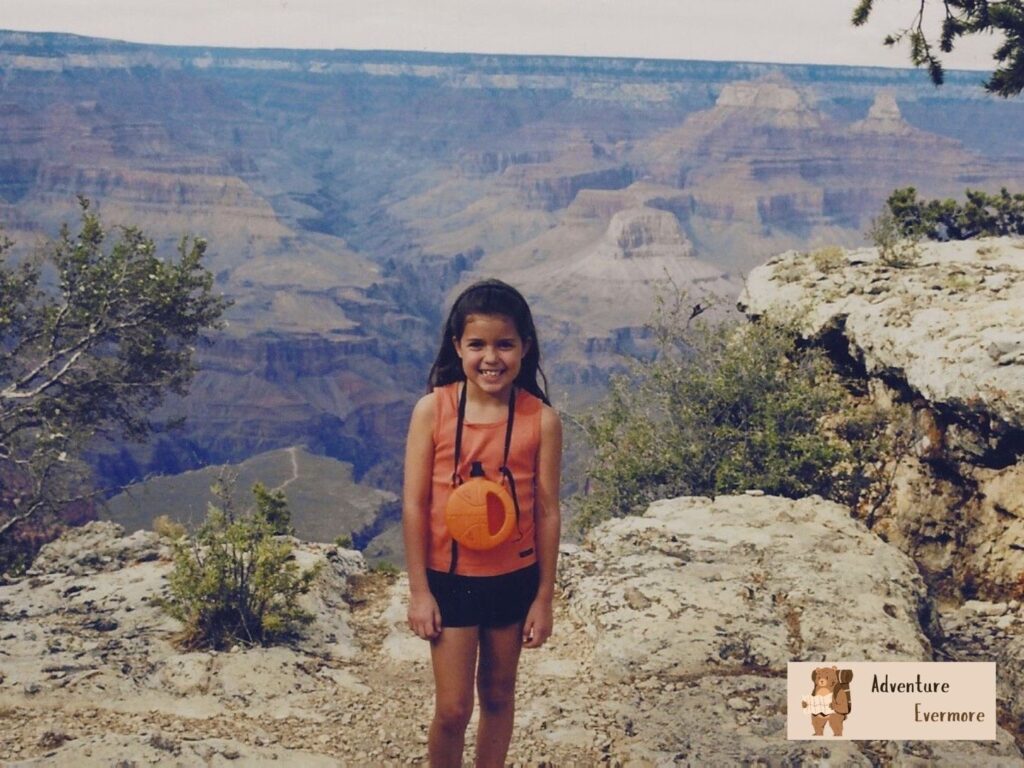
Drive Time/Distance To The South Rim
The drive to the South Rim is the closest and easiest access point to the Grand Canyon from Phoenix at about 3 hours and 45 minutes (240 miles), not including any stops along the way.
Drive Time/Distance To The North Rim
The higher elevated side of the Grand Canyon (the North Rim) is known as the calmer, quieter, better temperature side (especially in summer), but the drive does take quite a bit longer from the Phoenix area. It’s about 360 miles and takes around 7 hours and 45 minutes without any stops.
🚗 Ways To Get To The Grand Canyon From Phoenix
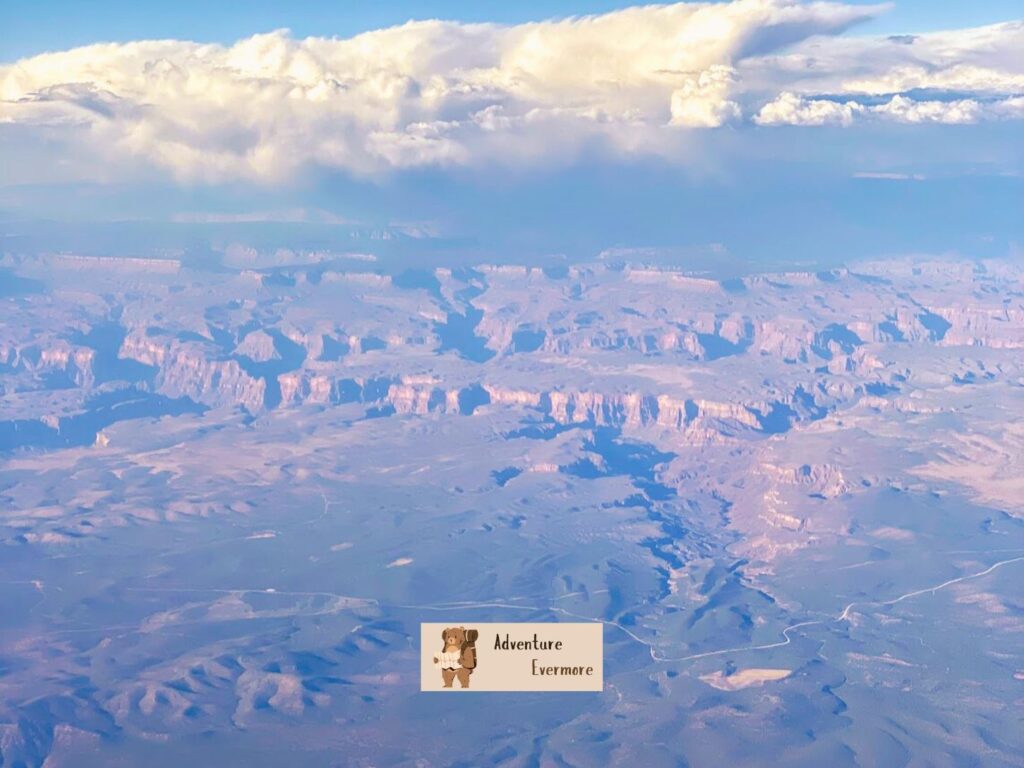
You don’t have to make the drive yourself from Phoenix to the Grand Canyon if you don’t want to since there are a few other ways to get up there:
- Tours: there are day trip tours to the Grand Canyon from Phoenix, though that doesn’t leave much time to explore
- Shuttle Service: there is a shuttle service (Airport Shuttle Of Phoenix) from the Phoenix airport up to the Grand Canyon
- Private Flight: the closest big airport to the canyon is in Phoenix, but you could take a day flight tour from Phoenix to the Grand Canyon
- Train: although it’s only part way, there is the Grand Canyon Railway vintage train that goes to the Grand Canyon from the town of Williams
📍 Directions/Stops From Phoenix To The Grand Canyon
There are three different route options for getting to the Grand Canyon from Phoenix, but the drive that goes straight up Interstate 17 has the best stops to see along the way.
Arcosanti – an experimental town
The first interesting stop you can make on the drive from Phoenix to the Grand Canyon is the experimental town of Arcosanti. This town is testing life with a low environmental impact.
Montezuma Castle – a national monument
The Montezuma Castle National Monument is the next stop on the way up to the Grand Canyon, just before you reach Sedona. The castle is a “home” built high in the rocks falsely named by Europeans as it did not belong to the Aztecs, but the Sinagua Indians.
Sedona – the red rock town
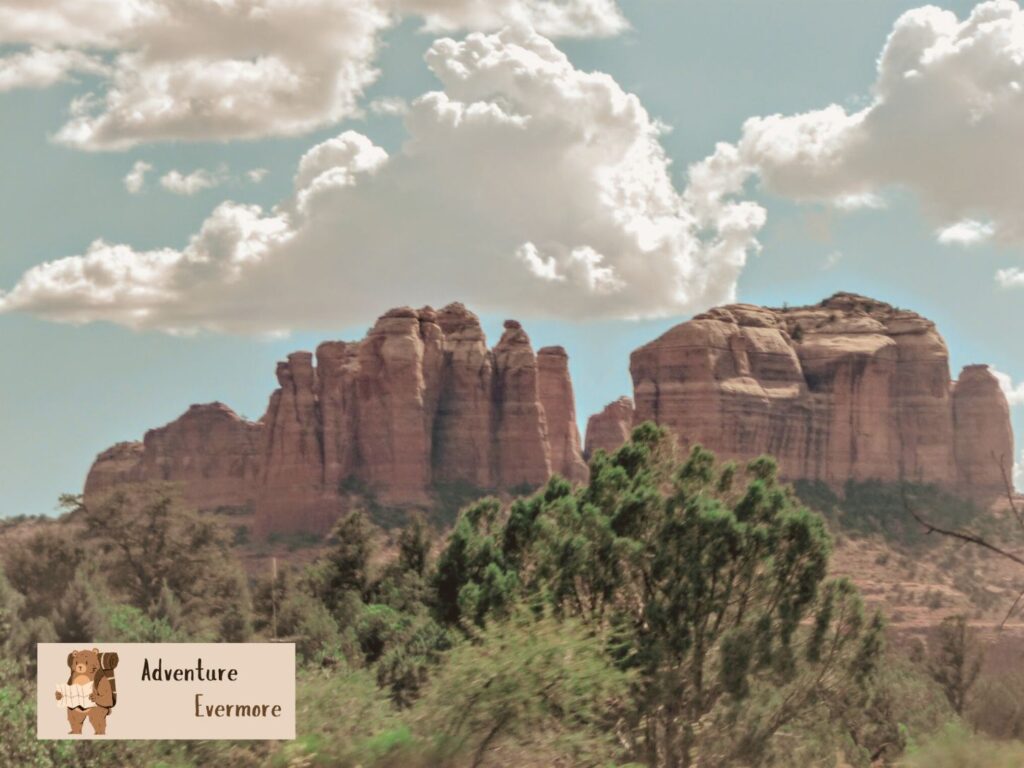
Sedona is one of the most popular day trips to take from the Scottsdale and Phoenix areas to hike, see the red rocks, or go stargazing. There are even Grand Canyon tours that include Sedona on their day trip.
Flagstaff – Arizona’s largest northern city
Before turning left to head towards the South Rim, or continuing straight to head towards the North Rim, you’ll run into Arizona’s largest northern city of Flagstaff. While Flagstaff doesn’t have quite as much to do as Scottsdale or Phoenix, it can be a great base city to explore more of Northern Arizona.
Sunset Crater – an inactive volcano
The Sunset Crater Volcano National Monument is an inactive volcano showing a crater and lava flow from its last eruption nearly 1,000 years ago (approximately in the year 1085).
Meteor Crater – where the moon landing was faked?
Taking a slight detour to the east, the Meteor Crater Natural Landmark is just outside of Flagstaff and a very unique place to visit. The Meteor Crater is the unique aftermath of a 30 to 50 meter asteroid that crashed into earth over 50,000 years ago (the crater’s nearly one mile across and 600 feet deep) that is commonly referred to as the place where they faked the moon landing.
Williams – the gateway to the Grand Canyon
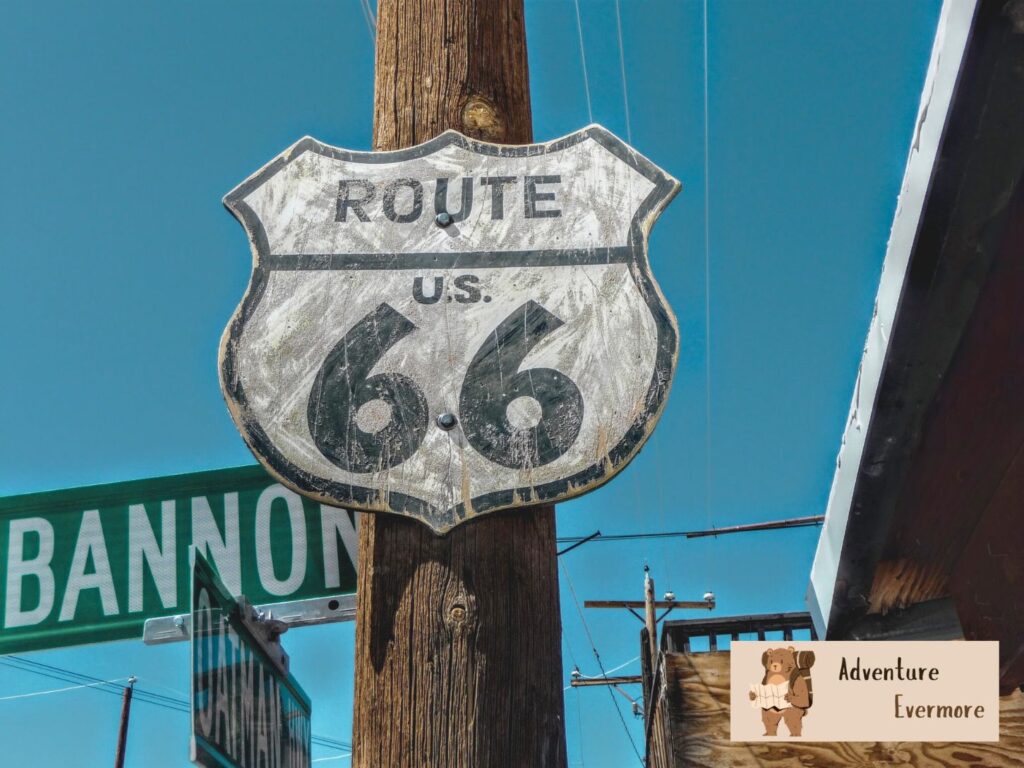
Williams is the last main town you’ll see before driving into the South Rim of the Grand Canyon. It’s known as the “Gateway to the Grand Canyon”, and Williams is a historic town along Route 66.
📆 When To Drive From Phoenix To The Grand Canyon
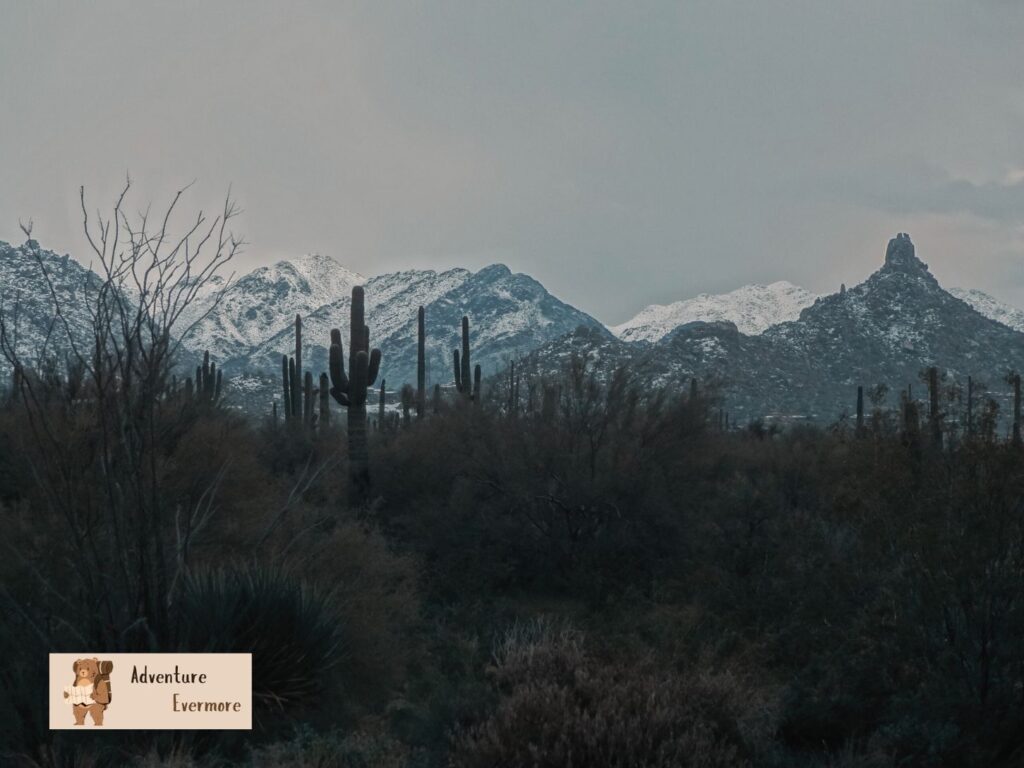
The Grand Canyon can be visited anytime of year, but the scorching summer months and unpredictable winter months (icy/snowy roads) are not the best options for visiting this natural wonder of the world. It can be done though if necessary, I’ve visited in the summer, it’s just not as nice of a time to be outdoors.
Considering temperatures, overall weather, and road conditions, April is the best month to visit the Grand Canyon with Mondays, Tuesdays, and Wednesdays being the less crowded days to drive up from Phoenix.
🏨 Where To Stay At The Grand Canyon
Since a day trip is possible but not the best option to fully experience the Grand Canyon, staying overnight is highly recommended.
There are many options from camping down at the bottom, staying in the Grand Canyon Village, near the Grand Canyon Visitors Center, or even in bigger cities like Williams or Flagstaff.
- Near the Grand Canyon Visitors Center, the two highest rated hotels are the Holiday Inn and The Grand Hotel
- Popular, higher rated hotels in Williams, Arizona are the Grand Canyon Railway Hotel, the Red Garter Inn, and the Grand Canyon Hotel
- Good options in downtown Flagstaff are the Residence Inn by Marriott, the Country Inn & Suites, and the Little America Hotel
🏜 What To Do At The Grand Canyon
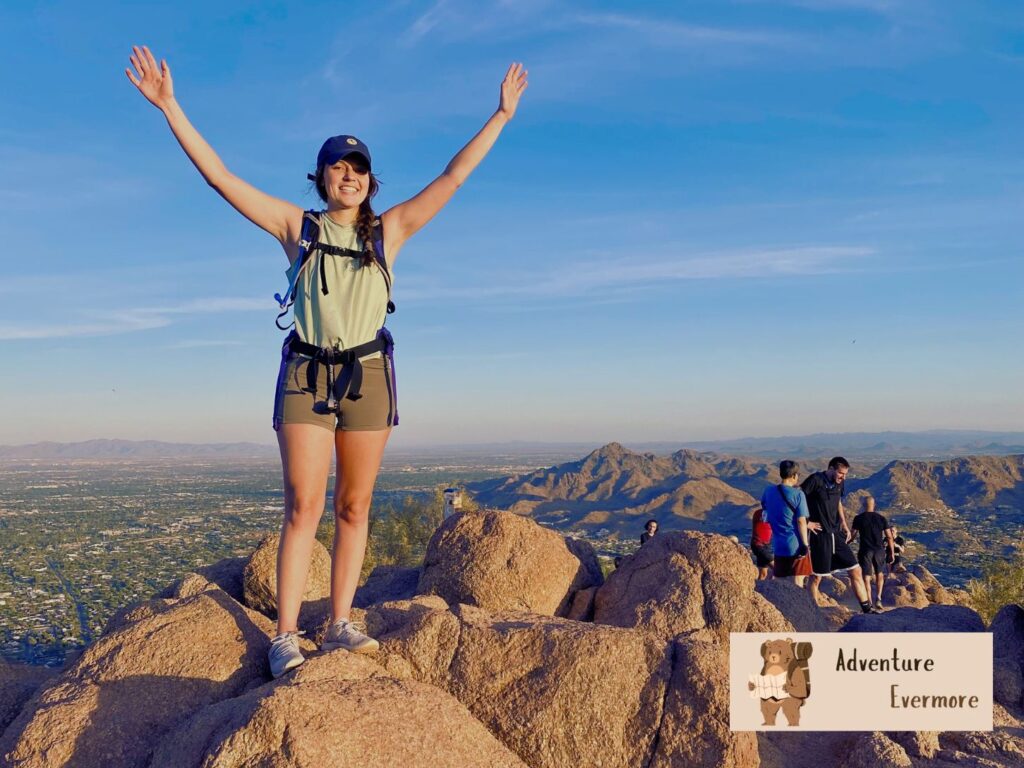
Aside from just admiring the natural beauty of the Grand Canyon, there are plenty of great outdoor activities to experience here.
- Hiking
- Helicopter Tours
- White Water Rafting
- Mule Rides
- Sunset Viewing
- Riding the Vintage Grand Canyon Railway Train
- Off-Road Tours
🔁 Sum Up: The Drive From Phoenix To The Grand Canyon
On any trip to the Phoenix area, it’s definitely worth the drive up to the Grand Canyon whether on a short day trip tour, a scenic drive stopping along the way, or a roadtrip on to other destinations like Las Vegas. Visit the North Rim if you’ve got extra time and want a quieter experience, or check out the South Rim which is closest to the Phoenix area.
